
Review: Sony CCD-VX3 Hi8 Camcorder, Part 2 – 3CCDs, Baby!

In Part 1: Consumer to Prosumer, my intro review to the Sony CCD-VX3 Hi8 camcorder, I highlighted the different video gear markets that began to feather each other during the 1990s: consumer, industrial, and professional broadcast. For Part 2, I thought I’d indulge in a bit more detail the formats and brands that ultimately seeded the emerging prosumer market and offered options, features, and higher quality optics and sensors that were embraced by videomakers who wanted more than lo-fi VHS.
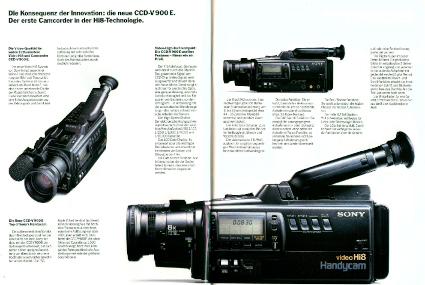
“Consumer” covers devices made for the average person, with upper-tier models aimed at the more ambitious and fastidious user, like Sony’s short-lived CCD-V801 Hi8 camcorder, a model that boasted RC time code, fully manual settings, and audio and video insert editing. I used the V801 to film assorted events, including dance performances in low light settings.
Now, if you had more dollars to spend, for the “Prosumer” market, Sony had the CCD-V5000 model, and for videographers with $10,000 to blow, there was the Industrial EVW-300 – arguably the apex of Hi8 recording.
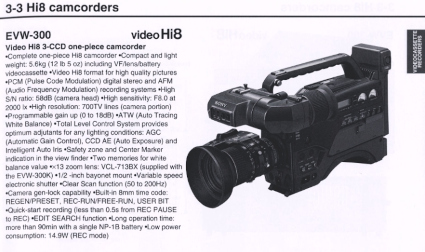
“Industrial” describes mid-tier video gear aimed at educational institutions, local TV and cable TV stations, and corporate videos producers.
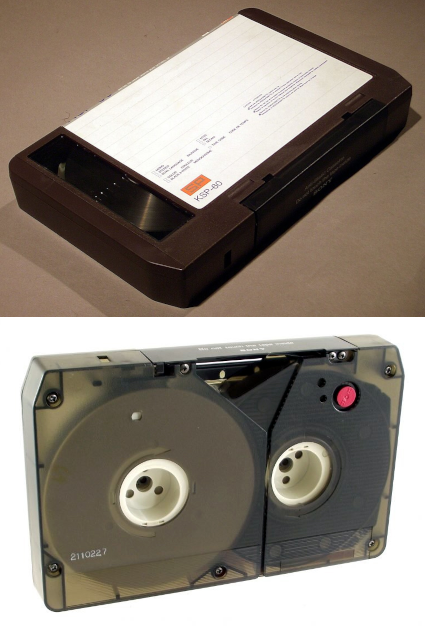
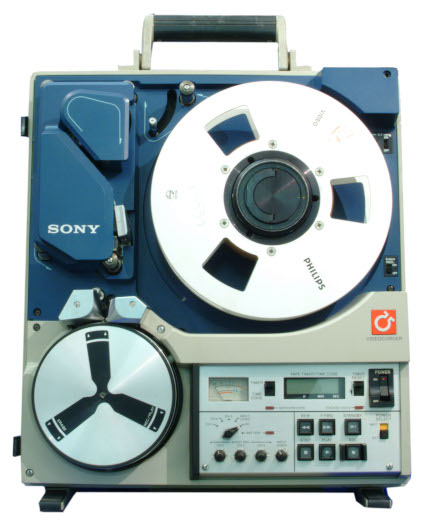
Although the early video cassette format U-Matic was originally conceived for the consumer market, the cost and bulk of the ¾” tape format proved unfeasible for the average consumer in the early 1970s, but it had several advantages over two of the most popular reel-to-reel [R2R] formats of the day: C-type, the 1” broadcast format which required a behemoth player-recorder; and ½” R2R which required smaller and ‘lighter’ player-recorder units.
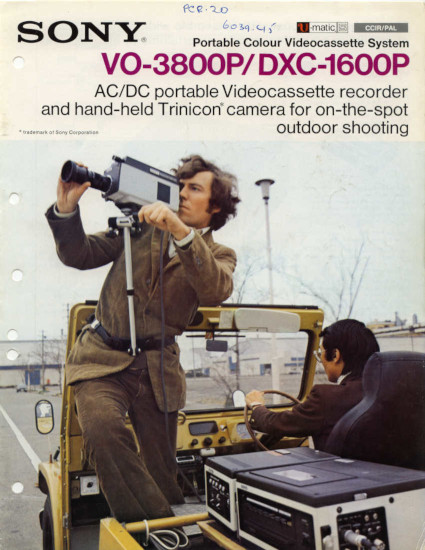
U-Matic’s chief advantage was housing fragile videotape in a cassette shell, and although the first portable player-recorder was hardly lightweight – the Sony VO-3800 weighed around 30 lbs – both the portable model and the top-loading editing decks were significantly lighter, space-saving, and cheaper than the C-type system, and offered ostensibly broadcast quality video, hence the format being widely adopted by smaller TV stations and commercial production facilities of various sizes wanting quality and accuracy when it came to editing.
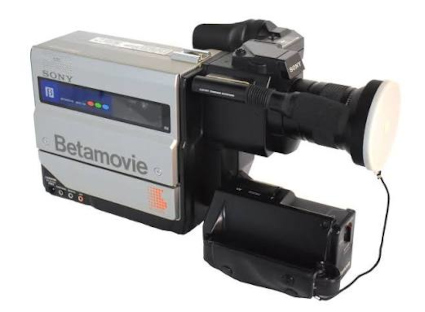
Until the emergence of professional and consumer camcorders from Sony via their respective Betacam (1982) and Betamovie (1983) models, through the 1970s and mid-1980s recording video outside of a studio setting consisted of a tube camera that was connected to a portable recorder via a large cable that fed power to the camera, and send audio and video to and from the recorder and recorder-player.
Whereas big networks and studios could afford to upgrade their systems with latest and biggest gear aimed at the professional broadcasting industry, local cable and independent operations often stuck with industrial formats like U-Matic which, for over 20 years, retained higher image quality than VHS (introduced in Japan in 1976, and in the U.S. in 1978) and Betamax (introduced in 1975).
The industry-standard EIAJ-1 (the Electronic Industries Association of Japan) ½ inch R2R videotape system was formalized in 1969, and preceded U-Matic by 2 years. The reason for establishing the EIAJ-1 standard was pretty straightforward – a R2R recording made on one brand of gear would now play on another brand’s gear – plus the establishment of 30 frames per second with 60 fields rather than the skip-field, 30 fields per second on Sony’s prior CVC series of cameras and decks.
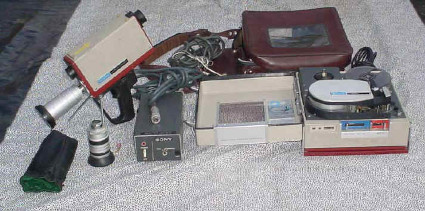
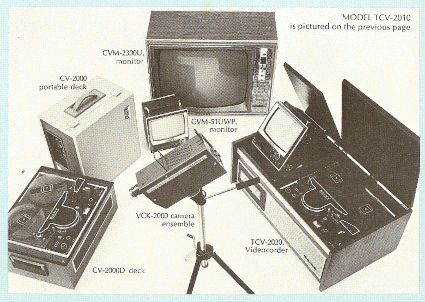
Prior to U-Matic, Sony EIAJ-1 Portapak R2R system (itself introduced in the skip-field system in 1967, and soon standardized to EIAJ-1 in 1969) was adopted by news crews because as its name infers, it was designed to be portable: a camera (Sony’s B&W Video Rover and the colour Video Ranger cameras) were tethered to a shoulder-strapped recorder (which Sony branded the Videocorder).
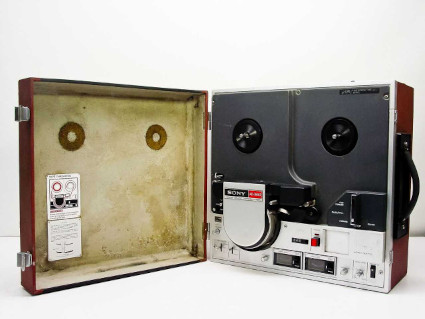
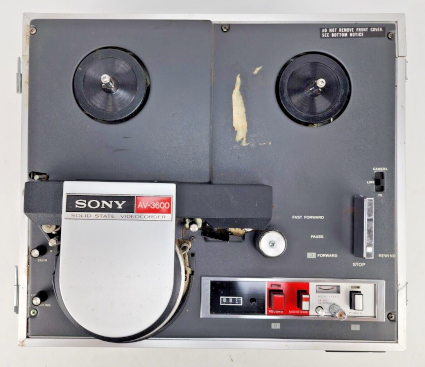
The footage could be edited using a portable player-recorder with a flying erase head that could be set up anywhere with a monitor. A colour camera and similarly sophisticated ‘lightweight’ editing decks (such as the massive Sony AV-3650) were also available. Brands such as Panasonic, JVC, and Hitachi / Shibaden had their own versions of the Portapak system.
Social activists (Canada’s Challenge for Change), collectives (Videofereex), educators, and artists embraced the Portapak gear because in the early years of videotape recording, while not cheap, one could use the cameras and recorders to film in a variety of locations, including concerts and sports venues, and also create experimental works and video art prior to the smaller, cheaper, less power-hungry, and more portable CCD camcorders of the 1990s.
One definite aspect of industrial gear is that the cameras, mixers, and recorders were often designed to be tougher, longer-lasting, generally fixable, and often benefited from the developments and improvements in professional gear used by networks for electronic news gathering (ENG).
Industrial camera gear was also smaller, more portable, easier to set up, and cheaper than the beasts cameramen lugged over their shoulders: during the pre-camcorder era, an ENG camera kit consisted of lens + camera + microphone + light + battery + thick multipin cable connecting the camera to a separate ‘portable’ recorder (which had its own massive battery).
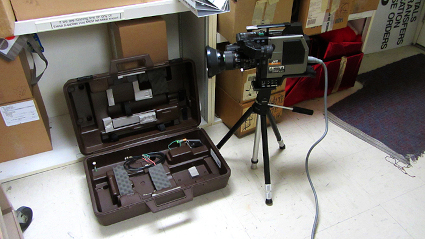
For example, although not as hefty as JVC’s red-clad KY-series of 3-Saticon tube cameras, the later beige BY-110U model came in several configurations for those on a tighter budget, and in 1986, for under $10,000 USD one could buy a 3-tube camera and U-Matic recorder package. In 2026 dollars, that package deal works out to about $28,000 US.
Professional studio setups included rack-mounted, massive players, recorders, monitors, and cooling fans – all (ideally) required to handle long hours of use without grievous, time-wasting, technical hiccups and overheating. Many studios also retained on-site technicians to ensure all gear remained in working order (or were maintained via repairs, parts swap, and creative MacGyvering).
Two brands that dominated the industrial market were Matsushita (aka Panasonic) and Sony, and unlike worthy competitors JVC, Hitachi / Shibaden, and to a far lesser degree Sharp (one of several electronics companies that flirted with broadcast gear) – Panasonic and Sony seemed to think big and broad, perhaps because they had built large manufacturing facilities and held distinctive vertical production philosophies.
Of the aforementioned Japanese electronic giants, Sony was the most savvy in promoting its consumer and industrial products, as evidenced in this 1970s tour of its facilities:
[Jump to 7:44 to see a short segment on their reel-to-reel decks being quality tested.]
Sony’s international brand recognition for Trinitron colour TVs and their Betamax format ensured the company’s confidence in using their own name within the consumer market. Panasonic, in turn, entered the same market by using both their own name, as well as others. Panasonic’s off-brand video cameras, VCRs, and videotape stock were rebadged as National in Europe, Asia, and the Middle East.
In North America, in addition to using its own name, specific models were rebadged as RCA, Quasar, GE, and Olympus, and Canon, but Canon’s line of cameras and portable VCRs features slightly modified designs, and some features less common on lower- and mid-tier consumer gear.
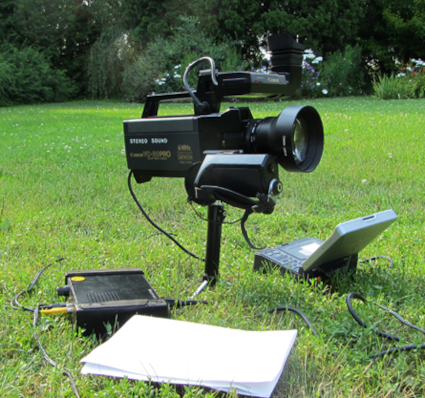
Their VC-50 Pro model, which I used to film a garden short, offered a high band, single Saticon tube housed in a striking deep blue but otherwise familiar Panasonic camera body – perhaps one of the earliest examples of a prosumer camera whose features and tube quality were slightly better than Panasonic’s own consumer line, but not as robust as Panasonic’s WV industrial line.
JVC similarly used the brand Normande in France and Ferguson in Britain for their cameras and VCRs, and in North America some of JVC’s tube cameras were produced under the Sylvania and Magnavox Chromavue badges.
Both Sony and Panasonic also produced gear for the consumer, audiophile, and professional audio and hi-fi markets, spanning receivers, turntables, reel to reel recorders, cassette decks, mixers, microphones, speakers, and an emerging variety of accessories. Unlike Sony, who used its name on every product line, Panasonic (founded by Matsushita in 1961 for their nascent video products) developed Technics in 1965 for upscale audio products, as well more niche brands, like Ramsa in 1979 for prosumer and pro-level audio mixers.
During the early and mid-1980s, many weddings, commemorations, graduations, lectures, sports competitions, and performances were shot on VHS / VHS-C, Betamax / SuperBetamax, and Video8, but as more resilient formats emerged, producers wisely shifted to S-VHS / S-VHS-C and Hi8; the gain in resolution was substantial, and the formats came in scaled down, consumer grade, point-and-shoot camcorder models, as well as feature-heavy prosumer models.
Major benefits of prosumer gear were (generally) full manual overrides for shutter speeds, aperture settings, video gain for low light circumstances; and Y/C connections that offered cleaner video signals, as luminance (the “Y”) and chrominance or colour (the C”) were channelled separately instead of being combined in a single composite signal.
Both Hi8 and S-VHS shared similar resolutions and signal quality, but they also shared a common flaw: without a time base corrector (TBC), even second generation / copy-of-a-copy recordings could suffer from smeary colours, as well as poor colour phasing / misalignment which were tough to fix if present in the edited final master. Unlike Sony’s CCD-V801, the CCD-VX3 has a TBC – a feature that was more widely included on several upper-tier Digital8 and minidv camcorders which could be similarly switched on & off.
When capturing footage, especially with finicky Final Cut Pro, you need the inclusion of a TBC to avoid weird hiccups, audio sync issues, and sudden capture crashes. You can check for the presence of a TBC in the camcorder’s manual (often available online at free sites such as archive.org and manualslib), and within the camcorder’s onscreen menu.
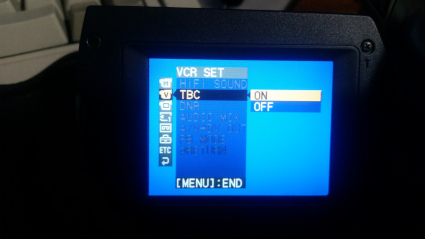
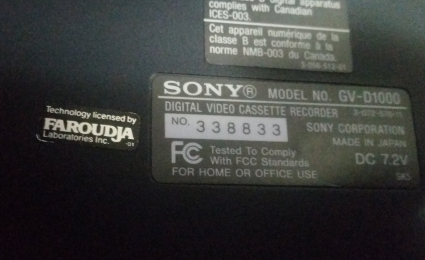
Another optional (but not foolproof) way to check for the presence of a TBC is looking for the name Faroudja, from whom Sony licensed their image stabilization technology. The sticker, if not worn off, is often pasted close to the tripod mount on the camera’s underside. As mentioned in Part 1, both the V801 and the VX3 have an option called CNR – Chroma Noise Reduction – which “minimizes color noise or irregular colors when playing back a tape.”
Although Sony did make consumer, prosumer, and professional Hi8 decks for editing, the focus here in Part 2: 3 CCDs, Baby! is on the camcorder; the VX3 was a major leap in Sony’s Handycam line due to having 3 CCD chips separately covering red, green, and blue for more precise and vivid colours; excellent lens with a larger, easier-to-adapt thread; proper smooth focusing and zoom rings; and full manual overrides for shutter speed, gain, focus, and white balance.
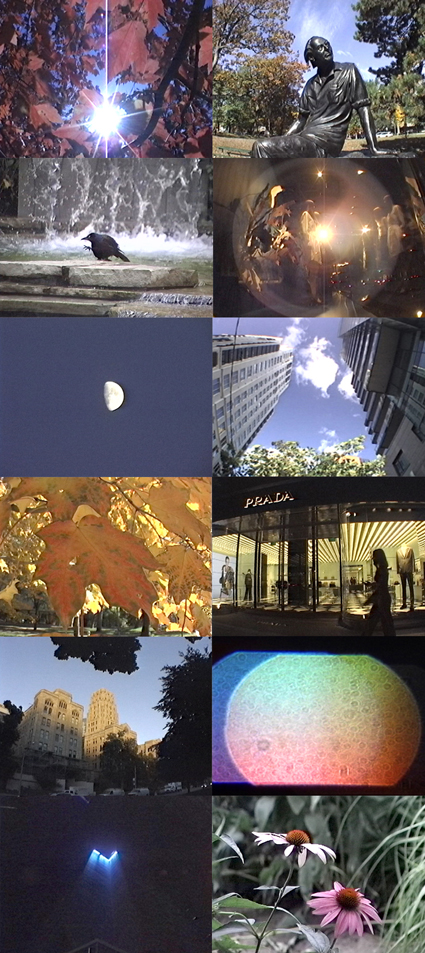
In Part 3, I’ll have a lengthy series of test reels showcasing the VX3 filming various locations in the daytime, around dusk, and at night – all recorded straight to Hi8, and digitized as ProRes 422 MOV files. Here’s a mosaic of frame grabs from the various shots from the footage:
Thanks for reading,
Mark R. Hasan
Publisher, BHA+ / Big Head Amusements

 Author: Mark R. Hasan